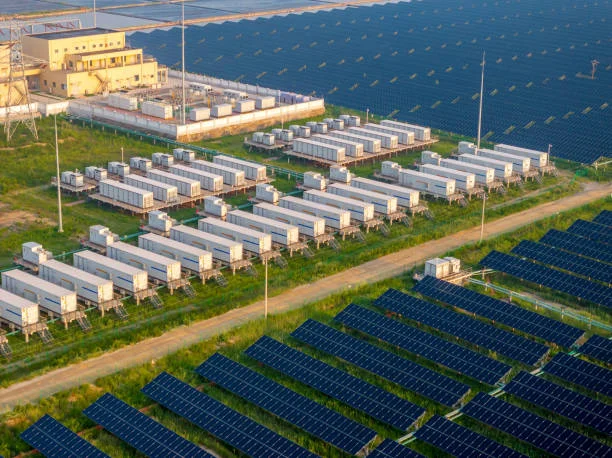
Hindustan Power has secured a series of renewable energy and battery storage projects across multiple Indian states, strengthening its position as an integrated clean energy player. The latest wins reflect the company’s strategic focus on combining solar power generation with energy storage solutions to support grid stability and India’s energy transition.
Led by Chairman Ratul Puri, Hindustan Power’s recent project additions underline its long-term commitment to sustainable infrastructure development and energy security. The expansion comes at a time when policymakers and utilities are increasingly emphasising the integration of storage with renewable generation to address intermittency and rising power demand.
🔍 Project Overview
Since early 2025, Hindustan Power has added nearly 1 GW of solar generation capacity and more than 0.75 GWh of battery energy storage to its portfolio. The projects span standalone solar plants as well as solution-based facilities that integrate photovoltaic power with advanced battery storage systems.
Key project highlights include:
- Solar capacity added: ~1 GW
- Battery storage capacity: 0.75+ GWh
- Project types: Standalone solar, solar + storage hybrids, standalone BESS
- Geographic spread: Multiple states across India
- Sector: Renewable Energy / Energy Storage
This expansion aligns with evolving grid requirements and the government’s push for dispatchable renewable power to ensure reliability as clean energy penetration increases.
⚡ Major Project Wins Across States
One of the key developments is a 435 MWp solar power project for which Hindustan Power has signed a 25-year Power Purchase Agreement (PPA) with Uttar Pradesh Power Corporation Limited (UPPCL). The long-term PPA provides revenue visibility while contributing to Uttar Pradesh’s renewable energy targets.
The company has also secured an ISTS-connected project from SJVN Limited, involving the installation of 200 MWp of solar capacity along with over 250 MWh of battery storage. This hybrid configuration is designed to deliver more reliable power across state boundaries through the inter-state transmission network.
Another significant milestone comes from Bihar State Power Generation Company Limited, where Hindustan Power signed a Battery Energy Storage Purchase Agreement (BESPA) for a 120 MWh standalone battery storage project. Spread across three substations, the project will be developed under a Build-Own-Operate-Transfer (BOOT) model, highlighting the growing role of standalone storage in grid management.
Most recently, the company secured a major project from Solar Energy Corporation of India (SECI) for an ISTS-connected project with 150 MW of contracted capacity. Under this project, approximately 300 MWp of solar generation and 360 MWh of battery storage will be deployed. The project was awarded through a competitive bidding and e-reverse auction process.
📊 Why This Development Matters
The integration of renewable energy with battery storage is becoming critical for India’s power sector. Projects like these help:
- Improve grid flexibility and reliability
- Enable higher penetration of solar energy
- Reduce curtailment of renewable power
- Support peak demand and load balancing
- Strengthen long-term energy security
By combining solar generation with storage, Hindustan Power is creating dispatchable clean power solutions that can respond to dynamic grid requirements.
🔮 Industry Outlook
India’s renewable energy sector is entering a new phase where energy storage plays a central role. With ambitious national targets for non-fossil fuel capacity and increasing demand for round-the-clock clean power, hybrid renewable projects are expected to grow rapidly.
As bidding frameworks evolve and storage costs decline, developers with integrated capabilities across generation and storage are likely to gain a competitive advantage. Hindustan Power’s recent project wins position it well to participate in this next stage of India’s clean energy transition.